Source Automatic Electric Red Date Dryer for Herbs, Vegetables, and Fruits
Find and compare 30 Automatic Electric Red Date Dryer models from China. These heat pump systems offer customizable drying for vegetables, fruits, and herbs with stainless steel chambers and varying batch capacities.
Key considerations
Products List


Durable in Use Vegetable Dryer Red Tea Dehydrator Red Dates Drying Machine
$8353.00 - $8793.00
MOQ: 1 Sets

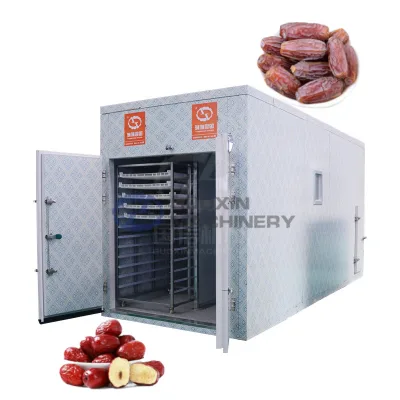
New Technology Cabinet Dryer for Food Red Dates Drying Machine Pecan Dryer
$7913.00 - $8793.00
MOQ: 1 Sets

Stable Performance Heat Pump Dryer Turmeric Dehydrator Red Dates Drying Machine
$14098.00 - $14840.00
MOQ: 1 Sets



Professional Manufacturer Rotary Dryer, Hot Sale Excellent Rotary Dryer
$9999.00 - $100000.00
MOQ: 1 Pieces


Comprehensive Sourcing Guide
Automatic Electric Red Date Dryer Sourcing Guide
Sourcing an Automatic Electric Red Date Dryer requires a careful balance between throughput capacity, energy efficiency, and product quality preservation. These machines are designed to handle high-volume dehydration of sensitive agricultural products, ensuring consistent moisture reduction without compromising the nutritional value or aesthetic appeal of the final dried goods. Buyers must navigate a market where specifications vary significantly between models, particularly regarding chamber dimensions, heating methods, and automation levels. Understanding the technical nuances of heat pump versus microwave drying systems is essential for selecting equipment that aligns with specific production goals and energy budgets.
The procurement process involves verifying critical operational parameters such as voltage requirements, power input, and environmental operating conditions. Since these units are often deployed in commercial food processing environments, reliability and ease of maintenance are paramount. Buyers should focus on suppliers who provide transparent data on drying chamber dimensions, dehumidification rates, and noise levels, as these factors directly impact facility layout and worker comfort. Additionally, the availability of customization options allows businesses to tailor the drying process to specific red date varieties, ensuring optimal texture and color retention in the finished product.
Product Scope and Observed Listing Signals
The current market for automatic electric red date dryers presents a diverse range of models, with observed listing prices spanning from $1 to $400,000 USD. This wide variance reflects differences in capacity, automation sophistication, and heating technology, ranging from small-scale batch dryers to large industrial systems. Minimum Order Quantities (MOQ) are consistently observed at one unit, indicating that suppliers typically operate on a made-to-order or direct sales model rather than maintaining large stock inventories. This structure allows buyers to procure single units for pilot testing or full-scale production lines without significant upfront inventory commitments.
Product listings frequently highlight key attributes such as automatic grade operation, electric power sources, and specialized functions for drying vegetables, fruits, and herbs. The core item descriptions often identify the equipment as commercial red date drying machines or onion dryers, emphasizing their versatility in handling various agricultural commodities. Customization is widely available, allowing buyers to specify requirements for drying chambers, heating capacities, and packaging configurations. The observed product models, such as JK06RD, JK12RD, and JK03RD, suggest a standardized naming convention that may correlate with specific capacity tiers or feature sets, providing a reference point for comparing different supplier offerings.
Technical Specifications to Verify
When evaluating technical specifications, buyers must closely examine the drying chamber dimensions and overall machine footprint to ensure compatibility with existing facility layouts. For instance, some models feature chamber sizes of 4000x2000x2200 mm, while others may have different configurations such as 5700x2170x2200 mm. The heat pump size and overall standard dimensions, such as 1675x860x1280 mm or 1560x1560x1340 mm, are critical for planning installation space and utility connections. Verifying these physical constraints early in the sourcing process prevents costly modifications to the production environment and ensures smooth logistics for delivery and setup.
Power and energy performance metrics are equally important, with observed power inputs ranging from 9.5 kW to higher capacities depending on the model. Heating and cooling capacities vary, with some units offering 21.0 kW heating and 18.0 kW cooling, while others provide 10.5 kW heating and 7.8 kW cooling. Dehumidification rates, such as 25.0 L/H or 12 L/H, directly influence the drying speed and efficiency, particularly in humid environments. Buyers should also verify the maximum temperature capabilities, which can reach up to 75°C, and the operating temperature ranges, typically between 8°C and 75°C, to ensure the equipment can handle the specific thermal requirements of red date dehydration.
Compliance and Safety Documentation
Safety and compliance documentation are essential for operating automatic electric red date dryers in commercial settings. Buyers should request detailed information on electrical safety standards, noise levels, and material certifications to ensure the equipment meets local regulatory requirements. Observed noise levels of 75 dB or 75 dB(A) indicate the need for appropriate hearing protection or sound insulation in the workplace, particularly for operators working in close proximity to the machinery. Verifying that the machine operates within acceptable acoustic limits helps maintain a safe and compliant working environment for staff.
Material safety is another critical consideration, with many units constructed from food-grade stainless steel to prevent contamination and ensure hygiene. Buyers must confirm that all components in contact with the product meet food safety standards, as this is crucial for maintaining the integrity of the dried red dates. Additionally, understanding the electrical ratings, such as rated currents of 9.6A, helps in planning the necessary circuit protection and power distribution infrastructure. Ensuring that the supplier provides comprehensive safety manuals and compliance certificates reduces the risk of operational hazards and regulatory penalties.
Cost Drivers and Commercial Terms
Several factors influence the total cost of ownership for automatic electric red date dryers, including power consumption, maintenance requirements, and initial purchase price. Models with higher heating and cooling capacities, such as those with 21.0 kW heating, may offer faster drying times but could incur higher energy costs. Buyers should analyze the energy efficiency of different models, considering the balance between upfront investment and long-term operational expenses. The availability of customization options may also impact the final price, as tailored features often require additional engineering and manufacturing resources.
Commercial terms, including packaging and shipping arrangements, play a significant role in the procurement process. Products are typically packed in wooden cases or plywood crates to protect the machinery during transit, with some suppliers offering shipment in wooden cases for added security. Buyers should clarify who is responsible for freight costs, insurance, and customs clearance, as these variables can significantly affect the landed cost. Understanding the lead times and production schedules is also important, as custom-built units may require longer preparation periods compared to standard models.
Supplier Qualification and Quality Control
Evaluating supplier qualifications is crucial for ensuring the reliability and quality of the Automatic Electric Red Date Dryer. Buyers should verify the supplier's manufacturing capabilities, quality control processes, and after-sales support services. Suppliers based in regions like Guangzhou, China, or Guangdong, China (Mainland), often have established supply chains and expertise in producing food processing equipment. However, buyers must conduct due diligence to confirm the supplier's reputation, financial stability, and track record in delivering similar products.
Quality control measures should include factory audits, product inspections, and performance testing to verify that the equipment meets the specified technical parameters. Buyers should request detailed documentation on the manufacturing process, including material sourcing, assembly procedures, and final testing protocols. Ensuring that the supplier adheres to international quality management standards helps mitigate the risk of receiving defective or substandard equipment. Additionally, establishing clear communication channels for technical support and spare parts availability is essential for maintaining long-term operational efficiency.
Long-Term Procurement Checks
Long-term procurement success depends on establishing robust relationships with suppliers and implementing continuous improvement strategies. Buyers should regularly review supplier performance metrics, including delivery times, product quality, and responsiveness to issues. Building a partnership with a reliable supplier ensures access to updated technology, spare parts, and technical support, which are critical for maintaining the efficiency of the drying operations. Regular maintenance schedules and preventive care plans should be developed in collaboration with the supplier to extend the lifespan of the equipment.
As technology evolves, buyers should stay informed about advancements in drying technology, such as improvements in heat pump efficiency or new automation features. Periodic reassessment of production needs and capacity requirements helps ensure that the equipment remains aligned with business goals. Engaging with industry networks and attending trade shows can provide insights into emerging trends and best practices in food dehydration. By maintaining a proactive approach to procurement and supplier management, businesses can optimize their operations and achieve consistent quality in their dried red date products.
FAQs
What is the maximum temperature for this dryer?
The maximum temperature reaches 75 degrees Celsius. This unit operates within a working condition range of 0 to 43 degrees Celsius ambient temperature while drying vegetables, fruits, and herbs effectively.
Can the machine be customized for specific needs?
Yes, customization is available for this Automatic Electric Red Date Dryer. The product is listed as customized and offers specific models like JK06RD and JK12RD to meet varying commercial drying requirements.
What is the power input requirement for operation?
The power input requirement is 9.5 kilowatts for the standard model. It runs on electric power with a rated current of 9.6 amps and includes heating and cooling capacities for efficient dehydration.
How is the unit packed for shipment?
The unit is packed in wooden cases or plywood packaging for safe transport. This ensures the commercial red date drying machine arrives securely, with specific dimensions provided for the drying chamber and heat pump size.
What is the dehumidification capacity of the system?
The dehumidification capacity is 25.0 liters per hour for the larger model. Smaller variants offer 12 liters per hour, supporting the drying of vegetables, fruits, and herbs with high productivity.
Which models are available for this drying system?
Available models include JK06RD, JK12RD, JK03RD, and HM 60. These units feature automatic grades and are designed for concentration and drying processes with varying chamber sizes and capacities.
What is the noise level during operation?
The noise level is 75 decibels during operation. This specification applies to the automatic dryer units which function as dehydrators for commercial red dates, onions, and other food items.